
Highlights:
• The answer completely depends on which part of portfolio management you actually want AI to handle
• AI handles some portfolio tasks well and creates real problems with others, just not always where you'd expect
• You can connect your brokerage accounts securely so AI can answer questions using your real portfolio data
When people ask whether AI can manage their portfolio, they're usually asking three different questions at once and don't realize it.
One person wants to know if a chatbot can explain what they own. Another wants to hand over decision-making to an algorithm. A third is wondering if it's safe to connect their brokerage to an AI tool. They all ask "Can AI manage my portfolio?" but what they really mean is totally different.
The answer depends on what you actually want the AI to do.


It helps to break "AI portfolio management" into four different jobs, because AI is much better at some of them than others.
First, there's explain and research. That's asking a chatbot what a covered call is, or having it translate a fund prospectus into plain language, or walking through the math on a 70/30 split. This is one of the areas where AI can be genuinely useful. It's decent at organizing information and explaining concepts. AI doesn't always have the latest information, so anything time-sensitive - like tax rules or fund details - is worth double-checking.
Second is monitor. Tracking your allocation, watching for drift, noting when dividends land. This needs live data from your brokerage. A chatbot won't automatically know what's in your brokerage account unless you give it that information or connect it to a service that can access it securely. A portfolio tool like Passiv does - it's connected to your accounts and knows what's actually in there. But that's monitoring, not management.
Third is recommend. This is where it gets complicated. A real recommendation needs to know your full situation - your goals, how much risk you can handle, how long until you need the money, your tax picture, all your accounts. A chatbot won't know any of that unless you type everything in, and even then it's making educated guesses, not actual advice. This is what registered advisers do.
Fourth is execute. Actually placing trades. Most people imagine this is the "AI managing" part. It's also where you need to be most careful.
The question "Can AI manage my portfolio?" gets a completely different answer depending on which of these you mean.
Where AI actually helps
A chatbot can be useful for research and organization. Ask it to read your ETF's fact sheet and create a risk checklist. Ask it to show you what happens if you contribute $500 a month for 20 years. Ask it to help you think through whether you're choosing the right account types for your holdings.
The catch is verification. If a chatbot tells you about a fund's holdings, check the fund company's website. If it shows you a scenario, you know what assumptions it made. If it pulls up information about tax rules, verify against CRA because rules change.
You can also use AI to organize a messy portfolio if your money is scattered across multiple accounts and brokerages. Feed it a list of what you own and ask it to group by asset class or show what's in which account. Just be thoughtful about what financial information you're sharing and where. (For a more structured approach to using AI as a money coach day-to-day, this guide on using AI to stay on track walks through the setup step by step.)
If you want to chat with AI about your portfolio without manually entering everything, SnapTrade Personal can securely connect your brokerage accounts to supported AI tools. The AI connection is read-only, so it can access information like your holdings and balances and answer questions using your real portfolio data, but it can't trade, move money, or change your account settings.
Where caution matters
AI sounds confident when it's wrong. That's the real problem.
The information an AI gives you can still be outdated or incorrect. A rule it tells you about might have changed, and it can misunderstand things like TFSA contribution room or RRSP deduction limits. Tax rules change, and contribution-room calculations should always be checked against your actual CRA My Account.
If an AI tool is recommending specific trades or trying to convince you to buy something, that's a different level of concern. That's the job that needs your full picture - your goals, your other assets, your debts, your timeline, your tax situation. That's why it's worth being cautious when a chatbot starts telling you exactly what to buy or sell.
Same with market timing calls or promises of high returns. Or tax advice.
Never give a chatbot or AI tool your brokerage password, your authenticator codes, or recovery codes. Instead, a tool like SnapTrade Personal lets you safely share information with AI.
The regulation piece
In Canada, people and firms that give investment advice or manage investments generally need to be registered with securities regulators. That registration gives investors an extra layer of protection.
Here's where people get confused: A robo-advisor might use algorithms and automation, including AI, but it operates through a registered investment firm. The firm is responsible for what happens. (If you're weighing a robo-advisor against managing your own portfolio, this breakdown of DIY investing vs robo-advisors is worth reading before you decide.)
A chatbot can explain investing, but that doesn't make it a financial advisor.
Before you trust any service that says it will manage or trade your investments, check whether the firm or person is actually registered. Use the CSA's National Registration Search. "Uses AI" does not automatically mean "manages your portfolio." "Automated" does not automatically mean regulated.


How AI tools for investing actually compare
There's a spectrum here, and it helps to know where different tools sit.
General chatbots (ChatGPT, Claude, Gemini) - Good for explaining concepts, comparing options, and working through scenarios. On their own, they don't know what's in your brokerage account. Some can connect to your portfolio through services like SnapTrade, which lets them work with your real account data.
AI-powered financial planning apps - These vary a lot. Some help with budgeting, planning, or understanding your finances using information you enter or connect. The important thing is knowing what the app can access and what it actually does with your data.
Passiv - Not an AI tool. It's a rules-based portfolio tool that connects to your brokerage and helps you stay on track with the portfolio you chose. You set your target. Passiv does the math and shows you the trades that would bring your portfolio back toward it.
Robo-advisors (Wealthsimple Invest, Questrade Portfolios, etc.) - These are managed investment services. You answer questions about your goals and risk tolerance, and the service builds and manages a portfolio for you. You pay a management fee for that hands-off approach.
AI trading bots - These deserve extra caution. There are legitimate tools in this space, but there are also plenty of scams and exaggerated claims. If a service says it will manage or trade your money for you, check that the firm behind it is properly registered.
For DIY investors, the first few categories offer a useful middle ground: help understanding and managing your portfolio without handing over the decisions.

The middle ground that actually works
Most DIY investors don't need AI to pick stocks. They need help with the boring parts.
You decide what you want your portfolio to look like. Your risk tolerance, your timeline, your goals - those are yours to set. AI can help you think it through, explain concepts, and show you scenarios. But the strategy is yours.
Once you've chosen a target portfolio, Passiv handles the repetitive math. It shows you the trades that would help invest new cash or bring your portfolio back toward your target. With supported brokerages, Passiv Elite can also let you place those trades with one click instead of entering each order manually.
If you need advice that's specific to your taxes, estate, or full financial situation, that's a good time to talk to a professional. The Passiv post on becoming a confident self-investor has good guidance on when to bring in a fee-only advisor versus handling things yourself.
It keeps AI where it's useful - helping you understand things and organize information - while you stay in control of the actual investment decisions.

The takeaway
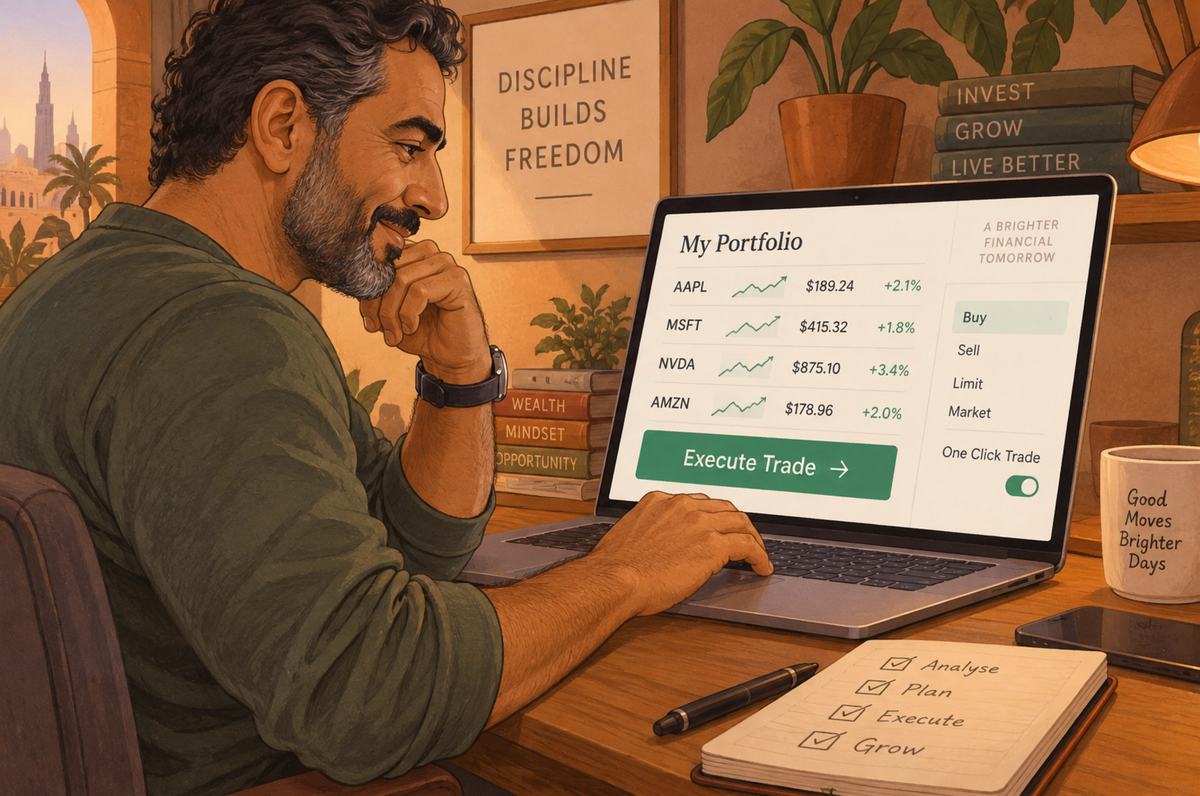
AI can help with a lot of portfolio stuff. Explaining concepts. Organizing information. Monitoring your allocation. That's different from handing over decision-making.
For most people working with their own investments, the sweet spot is this: you set the portfolio target, AI helps you understand the information, and a tool like Passiv does the math to keep you aligned. You stay in control. The tool handles the repetitive work.
If you want to manage your own portfolio without spending hours on the math, Passiv's free account lets you set your target portfolio, track your connected accounts, and see what trades would help you stay on track. Set it up in about 10 minutes. If you want to skip the manual order entry, Passiv Elite adds one-click trading with supported brokerages. And if you want to chat with AI about what you actually own, you can connect your portfolio through SnapTrade Personal and ask questions using your real account data.